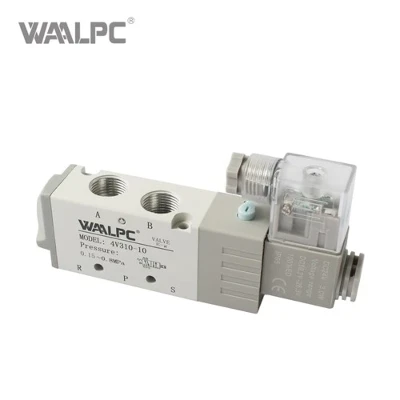


Filtration Stage: When compressed air or gas enters the valve body from the inlet, it first flows through the built-in filter (usually made of stainless steel or nylon, with a pore size range of 5-50μm). The filter removes solid particles (such as dust and iron filings), liquid droplets, and oil mist from the gas through physical interception and inertial separation, preventing impurities from entering downstream pipelines or pneumatic components (such as cylinders and solenoid valves), and avoiding equipment failure due to wear or blockage. Some high-end models employ multi-stage filtration structures; for example, a pre-filter intercepts large particles, a fine filter further removes tiny particles, and even integrates a drying module to lower the gas dew point.
Pressure Regulation Stage:The filtered gas enters the pressure regulating chamber, where pressure regulation relies on the interaction between the balance valve core structure and the spring preload. The specific process is as follows:
Pressure Sensing:Gas pressure acts on the pressure-bearing surface of the pressure regulating valve core, while the spring applies a counterforce to the valve core through its preload.
Dynamic Balance: When the inlet pressure changes, the valve core moves under the combined action of the pressure difference and spring force, altering the valve opening. For example, when the inlet pressure increases, the valve core is pushed upward, the valve opening decreases, the gas flow rate decreases, and the outlet pressure drops accordingly; conversely, when the inlet pressure decreases, the valve core moves downward, the valve opening increases, and the outlet pressure rises.
Stable Output: By repeatedly adjusting the valve opening, the system eventually achieves dynamic balance, stabilizing the outlet pressure at a preset value (error typically ≤ ±1%). Some models are equipped with a pressure gauge or pressure sensor to display the outlet pressure in real time and support remote pressure adjustment via external adjustment knobs or electronic control signals (e.g., 4-20mA).